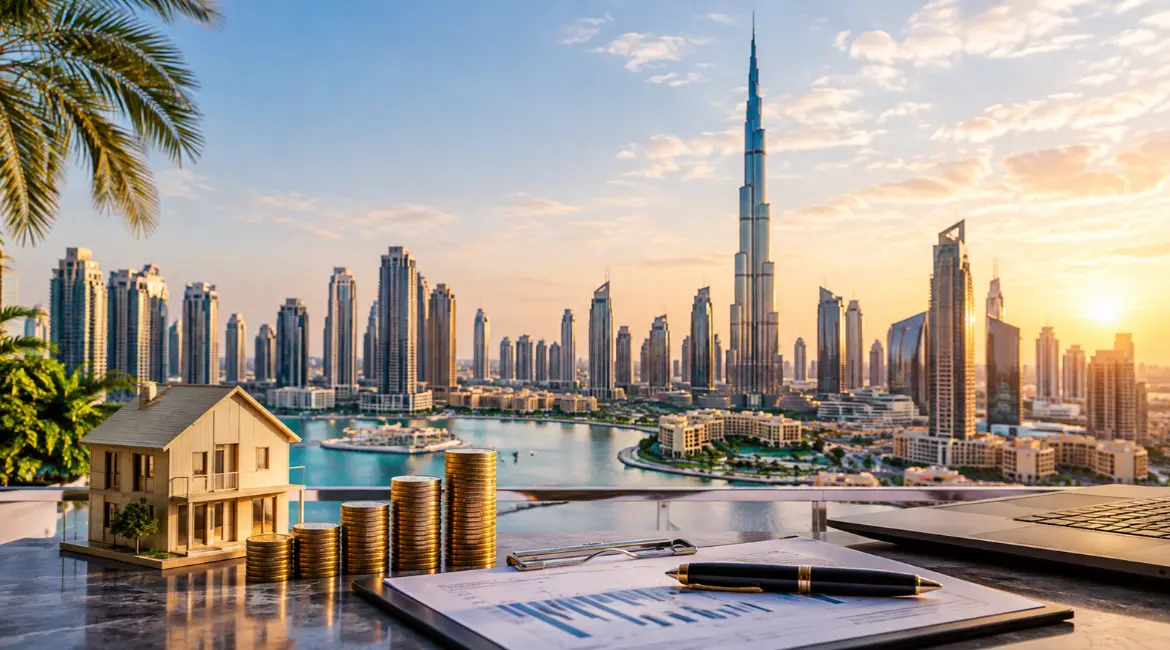
Real Estate Investment in Dubai can be a strong opportunity for buyers seeking rental income, long-term property growth, or a way to diversify their investment portfolio. But buying a property simply because the Dubai market is active does not guarantee good returns. Smart investors look at location, demand, property costs, developer reputation, rental potential, and their long-term goals before committing their money.
Dubai’s property market continues to attract investors from different countries. According to the Dubai Land Department (DLD), real estate investments reached AED 173 billion from 57,744 investments in Q1 2026, while foreign investment value reached AED 148.35 billion.
Dubai’s active property market offers many opportunities, but choosing the right investment requires careful research. Whether you are buying your first property or already have investment experience, these Real Estate Investment Tips will help you compare properties, understand potential returns, and make more informed decisions.
Here are 10 proven tips for smart Real Estate Investment in Dubai
1. Start With a Clear Investment Goal
Before searching for a property, decide what you want from your investment.
Your goal could be:
- Generating regular rental income
- Building long-term capital growth
- Buying an investment property for resale
- Purchasing an off-plan property
- Building a portfolio of multiple properties
- Buying a property that you may use personally in the future
Your objective will influence your choice of location, property type, budget, and investment period.
For example, an investor focused on rental income may prioritize areas with established tenant demand, while someone looking for long-term growth may consider communities with planned infrastructure and development.
Clear goals make Investing in Dubai Real Estate more focused and reduce the chance of making a decision based only on property appearance or short-term market excitement.
2. Choose the Location Based on Real Demand
Location remains one of the most important factors in property investment.
Instead of choosing an area simply because it is popular, consider what creates sustainable demand. Look at:
- Access to major roads
- Metro and public transport connections
- Nearby offices and business districts
- Schools and healthcare facilities
- Retail and entertainment options
- Community amenities
- Existing rental demand
- Future infrastructure
Established areas such as Dubai Marina, Downtown Dubai, Dubai Hills Estate, Business Bay, and Jumeirah Village Circle attract different buyer and tenant groups.
You should also study Dubai Real Estate Trends before making a decision. DLD provides official property data covering transactions, rents, projects, valuations, brokers, and developers, giving investors a useful starting point for market research.
3. Select the Right Property Type
Dubai offers a wide range of apartments, villas, townhouses, penthouses, and other property types.
Each option has different purchase prices, maintenance requirements, tenant profiles, and resale considerations.
Apartments can provide access to established rental markets and may have a lower entry price than larger properties. Villas and townhouses can appeal to families looking for more space and privacy but may require a higher initial investment.
When comparing properties, consider:
Purchase price + expected rent + ownership costs + potential resale demand
This gives you a more realistic picture than looking at the asking price alone.
The right property is not necessarily the most expensive or luxurious one. It is the property that matches your investment objective and financial plan.
4. Research the Developer Carefully
If you are considering an off-plan property, researching the developer should be a major part of your decision.
Look at the developer’s previous projects, delivery history, construction quality, reputation, payment plans, and project locations.
Comparing Real Estate Developers in Dubai can help you understand differences in development experience, project quality, community planning, and delivery performance.
For off-plan investments, also verify project information through official channels. Dubai Land Department’s current registration framework includes services covering project registration and real estate transaction registration.
Do not choose a project only because it has attractive marketing or a flexible payment plan. Consider the developer and the project fundamentals together.
5. Calculate Rental Yield and All Ownership Costs
Rental income is an important consideration for many Dubai property investors.
A simple gross rental yield calculation is:
Gross Rental Yield = Annual Rental Income ÷ Property Purchase Price × 100
For example, a AED 1.5 million property generating AED 90,000 in annual rent would have a gross rental yield of 6%.
But gross yield does not represent your final return.
You should also consider:
- Service charges
- Property management fees
- Maintenance
- Insurance where applicable
- Vacancy periods
- Financing costs
- Transaction expenses
- Leasing costs
This is one of the most practical Tips for Real Estate Investment in Dubai because two properties with similar prices can produce very different net returns.
Always calculate the potential income after realistic expenses rather than relying only on advertised rental yields.
6. Compare Off-Plan and Ready Properties
One of the most important decisions when investing in Dubai Real Estate is whether to purchase an off-plan or ready property.
Off-plan property
Off-plan properties may offer:
- Flexible payment plans
- New developments and amenities
- Potential price growth during the development period
- Access to newly launched communities
However, investors should consider construction timelines, developer performance, payment commitments, and future market conditions.
Ready property
Ready properties allow buyers to inspect the actual unit and assess the existing community, rental market, and condition of the property.
They may be useful for investors who want clearer visibility into current rental income and operating costs.
Neither option is automatically better for every investor. Compare both according to your budget, investment timeline, expected returns, and risk tolerance.
7. Understand the Complete Purchase Cost
The purchase price is only one part of your investment.
Before buying, create a complete budget that includes applicable transaction and registration expenses, financing costs, service charges, maintenance, and other ownership costs.
Foreign investors should also understand the applicable ownership rules for the property they are considering. Dubai permits foreign ownership in designated areas, while transaction registration and documentation requirements apply to property purchases.
Ask for a clear breakdown of all expected costs before signing an agreement.
A property that appears affordable at first may require a larger overall budget once all expenses are included.
8. Study Supply and Future Development
Current demand is important, but future supply can also affect your investment.
If many similar properties are scheduled to enter the market, landlords may face greater competition for tenants. This can affect rental pricing and occupancy.
Before buying, research:
- Current available units
- Upcoming residential projects
- Expected new supply
- Infrastructure improvements
- Community facilities
- Future commercial development
- Access and transportation plans
These factors can help you understand whether today’s demand may remain sustainable.
Good Tips for Dubai Real Estate Investment should therefore look beyond today’s property prices and consider how the surrounding area could develop over the next several years.
9. Think About Your Exit Strategy
A smart investor should know not only why they are buying but also what they may do with the property later.
Possible strategies include:
- Holding the property for rental income
- Selling after capital appreciation
- Selling after completion of an off-plan project
- Refinancing and continuing to hold
- Adding the property to a long-term portfolio
Your expected holding period should influence the property you choose.
If you expect to sell within a few years, resale demand and liquidity may be particularly important. If you plan to hold for the long term, rental demand, community development, infrastructure, and ongoing ownership costs may receive greater attention.
Planning your exit strategy early is among the most useful Real Estate Investment Tips because it helps you assess the investment beyond the initial purchase.
10. Get Professional Guidance Before You Commit
Dubai’s property market is broad, with thousands of properties across different communities and price segments.
A qualified Real Estate Broker in Dubai can help investors compare properties, understand market pricing, arrange viewings, negotiate terms, and navigate the purchase process.
However, professional advice should support your research rather than replace it.
Before making a decision, ask for clear information about:
- Property price
- Expected rental income
- Service charges
- Payment schedule
- Developer or seller
- Property condition
- Comparable properties
- Potential resale demand
For larger investments, investors may also consider independent legal, tax, or financial advice based on their circumstances.
How to Make a Smarter Investment Decision
The best approach to Real Estate Investment in Dubai is to compare properties using the same set of criteria.
Create a simple comparison covering:
| Factor | What to Check |
|---|
| Location | Access, amenities, rental demand |
| Price | Comparable properties and current market value |
| Rental income | Expected annual rent |
| Yield | Gross and estimated net yield |
| Costs | Service charges, maintenance, financing |
| Developer | Track record and project history |
| Supply | Existing and upcoming competing properties |
| Exit | Resale demand and expected holding period |
This process makes it easier to separate an attractive investment opportunity from a property that simply has good marketing.
Why Research Matters in Dubai’s Property Market
Dubai’s market provides opportunities across different budgets, locations, and property categories. DLD reported that the emirate recorded AED 252 billion in total real estate transaction value in Q1 2026, while the number of investors reached 48,448, including 29,312 new investors. Foreign investment value also reached AED 148.35 billion.
These figures show the scale of activity, but market-wide growth should not be treated as a guarantee that every property will appreciate or generate a specific return.
Property performance can vary significantly according to location, purchase price, rental demand, property quality, supply, financing, and holding period.
That is why Tips for Real Estate Investment in Dubai should always begin with individual property research rather than broad market assumptions.
Conclusion
Successful Real Estate Investment in Dubai starts with a clear plan and careful research. Define your financial goal, select a location based on real demand, compare property types, research the developer, calculate rental yield and total costs, and understand the future supply in the area.
Whether you choose an off-plan apartment, a ready villa, a townhouse, or another property type, focus on the numbers and fundamentals behind the opportunity.
The strongest investment decision is not necessarily the property with the biggest headline return. It is the property that fits your budget, investment strategy, expected holding period, and risk level.
With a structured approach and reliable market information, investors can make more informed decisions and identify properties that align with their long-term objectives.

 sacscreativemedia