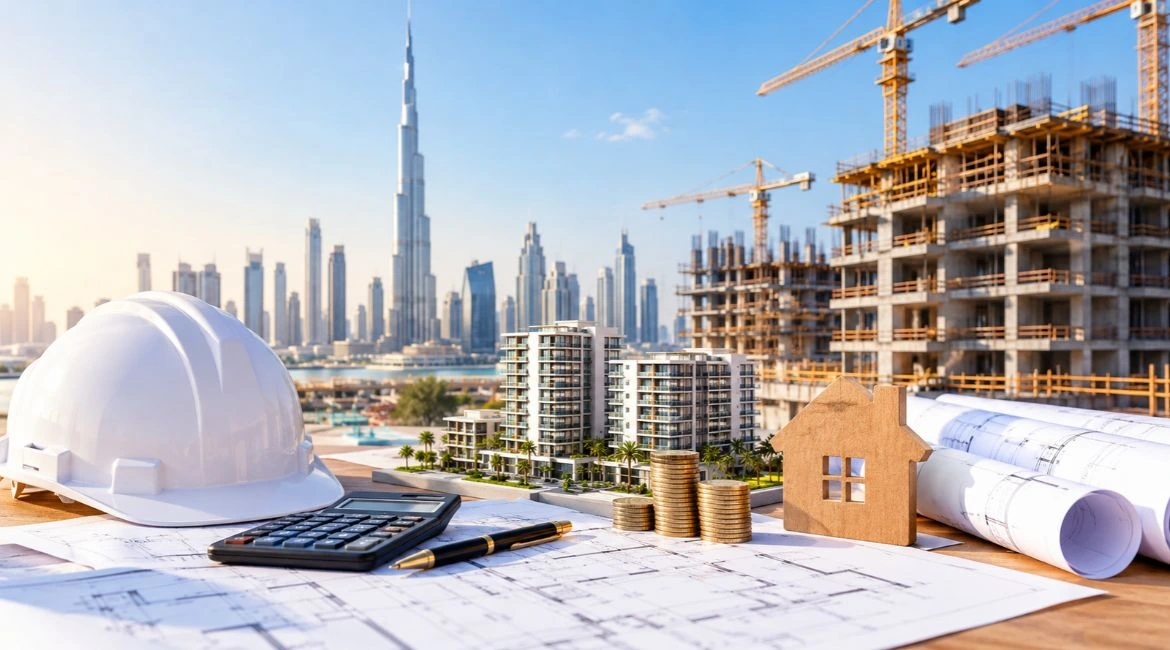
Dubai Construction Costs are becoming a major consideration in the emirate’s property market in 2026. New residential developments continue to attract buyers and investors, but rising material prices, labour expenses, and supply chain pressures are making project budgets harder to manage. Behind the steady flow of off-plan launches, developers face a key challenge: balancing construction expenses with competitive pricing and buyer expectations.
For buyers and investors, these changes raise an important question: will higher building costs lead to more expensive off-plan properties? The answer depends not only on construction budgets but also on market demand, competition, and each developer’s pricing strategy.
Why Are Construction Expenses Changing in Dubai?
Dubai’s expanding real estate and infrastructure sectors create ongoing demand for building materials, contractors, equipment, and skilled workers. When several major projects require similar resources, developers may face higher procurement costs or longer delivery times.
Dubai’s average construction cost reached approximately US$1,990 per square metre, with construction cost inflation forecast at 5% for 2026. Shortages of specialist mechanical, electrical, and plumbing (MEP) workers can also place additional pressure on project budgets.
International supply chains can create further uncertainty. Higher freight expenses and longer shipping routes may affect the procurement of imported building materials. However, these pressures are not uniform across the sector. Some locally produced materials, including cement, may remain comparatively stable.
Several factors can influence a developer’s construction budget:
Building materials: Steel, aluminium, concrete, glass, and finishing products contribute to the overall cost of residential developments.
Labour and specialist services: Skilled workers and technical contractors are essential for installing lifts, cooling systems, electrical equipment, and other building components.
Transportation and logistics: Freight charges, insurance, alternative shipping routes, and delivery delays can increase procurement expenses.
Equipment availability: Longer lead times for generators, transformers, lifts, and other essential equipment can affect project schedules.
Financing and project delays: Extended construction periods can increase financing, site management, and equipment-related expenses.
The impact varies according to the materials used, the project’s design, its construction stage, and the developer’s supply agreements. Consequently, two residential developments launched during the same period may experience different cost pressures.
How Rising Costs Influence Off-Plan Property Prices
Developers generally establish launch prices by considering more than construction expenses. Their calculations may include land acquisition, architectural design, engineering, infrastructure, regulatory requirements, financing, marketing, and the expected selling price of each unit.
When building expenses increase, developers must decide how to manage the additional financial pressure. They may absorb part of the increase, negotiate better supplier terms, improve construction efficiency, reduce selected incentives, or revise prices for new launches.
Consider a hypothetical residential development with an original construction budget of AED 100 million. If the relevant construction costs increase by 5%, the additional expense would be AED 5 million. The developer might absorb some of this amount, identify savings elsewhere, or distribute the additional cost across the project where market conditions permit.
This example illustrates a budget calculation rather than a prediction of property price increases. A 5% rise in construction costs does not mean that apartment prices must rise by 5%. Construction is only one part of the total development budget, and the final selling price also depends on competition, demand, available supply, and the developer’s financial position.
In areas with strong buyer demand and limited comparable inventory, developers may have more flexibility to revise prices. Where several similar projects compete for buyers, they may instead maintain competitive launch prices or offer additional incentives.
How Developers Are Managing Higher Construction Expenses
1. Reviewing Launch Prices
Developers may adjust the prices of newly launched apartments and villas when updated budgets make the original pricing strategy less viable. The extent of any adjustment depends on the project’s costs, location, specifications, and target market.
However, developers cannot always pass additional expenses directly to buyers. If comparable properties are available at lower prices, a significant increase may reduce demand. Pricing decisions therefore require a balance between financial feasibility and market competitiveness.
2. Negotiating Supplier Agreements
Bulk purchasing, advance procurement, and fixed-price construction contracts can help developers manage uncertainty. By agreeing on certain costs before construction progresses, they may reduce exposure to sudden price changes or delivery disruptions.
The protection offered by these arrangements depends on the contract terms, the materials covered, and the timing of procurement. Developers with established contractor relationships may have more flexibility, although the benefits vary by project.
3. Improving Design and Construction Efficiency
Some developers review layouts, standardise selected components, simplify complex design features, or source suitable materials locally. These measures can reduce waste and improve construction efficiency without necessarily reducing the overall quality of the property.
Buyers should nevertheless check whether changes affect the promised finishes, amenities, or specifications. The property’s contractual documents provide an important reference for understanding what the developer has agreed to deliver.
4. Adjusting Discounts and Incentives
Instead of raising the advertised price, a developer may reduce discounts, withdraw selected promotional benefits, or change offers covering registration fees. As a result, a launch that appears competitively priced may have a different overall cost once all incentives and charges are considered.
Buyers should compare the actual amount payable rather than relying only on promotional claims. A clear breakdown of the purchase price, fees, payment dates, and included benefits provides a more reliable basis for comparison.
Why Payment Plans Matter to Off-Plan Buyers
Payment plans can help developers attract buyers while arranging cash flow throughout a project’s development. They also allow purchasers to spread payments over an agreed period rather than paying the entire purchase price upfront.
Common arrangements include construction-linked instalments, time-based payment schedules, and post-handover plans. The availability and terms of each option depend on the specific development and the developer’s sales strategy.
Dubai Off-Plan Payment Plans should be assessed alongside the total purchase price, not in isolation. A low booking deposit may make a property easier to reserve, but it does not necessarily mean the property is cheaper. Similarly, a post-handover plan may offer additional time to pay without guaranteeing a stronger investment return.
Before committing, buyers should confirm the instalment schedule, construction milestones, handover obligations, and applicable fees. They should also check the project’s registration and escrow arrangements with the relevant Dubai authorities and ensure they understand the sale agreement.
Affordability matters throughout the construction period. Buyers should consider whether they can meet future instalments while allowing for other expenses, potential financing costs, and unexpected changes in their personal financial circumstances.
Do Higher Prices Guarantee Better Property Quality?
No. Higher prices may reflect increased construction expenses, but they do not automatically indicate better materials, superior finishes, or stronger construction standards.
Some developments justify their prices through practical layouts, durable materials, efficient building systems, useful amenities, and convenient locations. Others may face higher expenses without offering meaningful improvements to the finished property.
Buyers should compare the actual specifications of competing properties. Important details include flooring, kitchen fittings, windows, cooling systems, storage, parking, common areas, and the facilities included in the purchase.
The developer’s delivery history is equally important. Reviewing completed projects can provide insight into construction quality, handover standards, maintenance requirements, and the consistency between promised and delivered specifications.
A higher launch price is not necessarily evidence of better value. Buyers should understand what they are paying for and whether the property’s location, features, and expected long-term usefulness justify the difference.
What Should Buyers Check Before Investing in Off-Plan Property?
Understanding Dubai Construction Costs can help buyers ask more informed questions, but construction expenses alone cannot establish whether a property is a sound investment. A broader assessment of the development, its price, and its contractual terms is essential.
Use this checklist before making a purchase:
Compare similar properties: Review developments with comparable locations, layouts, sizes, specifications, and completion dates.
Research the developer: Examine completed projects, delivery records, construction quality, and reputation.
Calculate the full purchase cost: Account for applicable registration fees, service charges, financing expenses, and other relevant costs.
Review the sale agreement: Understand payment obligations, specifications, completion terms, and conditions relating to changes or delays.
Assess the payment schedule: Confirm that each instalment is affordable and that you can meet payments during construction and at handover.
Evaluate rental and resale demand: Consider competing supply, tenant demand, transport access, and the property’s suitability for its intended market.
Allow for uncertainty: Maintain financial reserves and avoid relying entirely on projected capital appreciation.
Buyers searching for the Best Off plan property in Dubai should also consider their individual objectives. Someone purchasing a future home may prioritise community facilities, layout, and completion timing. An investor may focus more on potential rental income, resale demand, total acquisition costs, and the risk of additional competing supply.
What Is the Outlook for Dubai Off-Plan Pricing?
The direction of off-plan prices will depend on how construction expenses interact with market demand, available supply, financing conditions, and developer strategies. Higher input costs can put pressure on project budgets, but they do not guarantee that every new development will become more expensive.
Turner & Townsend’s 2026 forecast identifies continued construction-cost inflation and specialist skills shortages as challenges for Dubai. At the same time, reporting by The National in July 2026 indicated that some UAE developers and contractors were absorbing higher imported-material costs, supported by fixed-price agreements and advance procurement.
These developments demonstrate why buyers should not assume that all cost increases will immediately appear in launch prices. Some developers may protect existing buyers from additional expenses, while others may revise prices or incentives for future launches. The effect will vary according to contractual commitments, project budgets, and the strength of buyer demand.
For prospective purchasers, the practical approach is to compare current asking prices with relevant market alternatives, examine the developer’s delivery record, and assess whether the property remains affordable under different market conditions.
Conclusion
Dubai Construction Costs can affect how developers price and deliver off-plan properties, but the impact varies by project. Buyers should evaluate each development individually instead of assuming that rising building expenses will automatically increase property values.
Before investing, compare the total purchase cost, developer track record, construction progress, contractual terms, and expected demand in the area. Review payment obligations carefully and ensure they fit your budget.
Ultimately, a sound investment depends on the property’s overall value, location, quality, and suitability for your financial goals—not simply its launch price or payment plan.

 sacscreativemedia